
Do you have a J.Costa variator and want to know how to adjust it to your liking? Or do you need replacement weights to maintain your variator? Do not worry, in this article we are going to explain everything you need to know about J.Costa weights or rollers.
What are J.Costa weights?
The weights of J.Costa variators are the equivalent of a roller in a conventional automatic motorcycle variator, as they are responsible for adjusting the gear ratio depending on the position they are in.
Unlike a conventional roller, the weights do not move along guides and ramps, but rather emerge from or descend into cavities located in the variator body, providing a much more precise and direct response at the throttle grip.
Their characteristic blue cylinder shape makes them easy to distinguish from any other component assigned to the transmission.
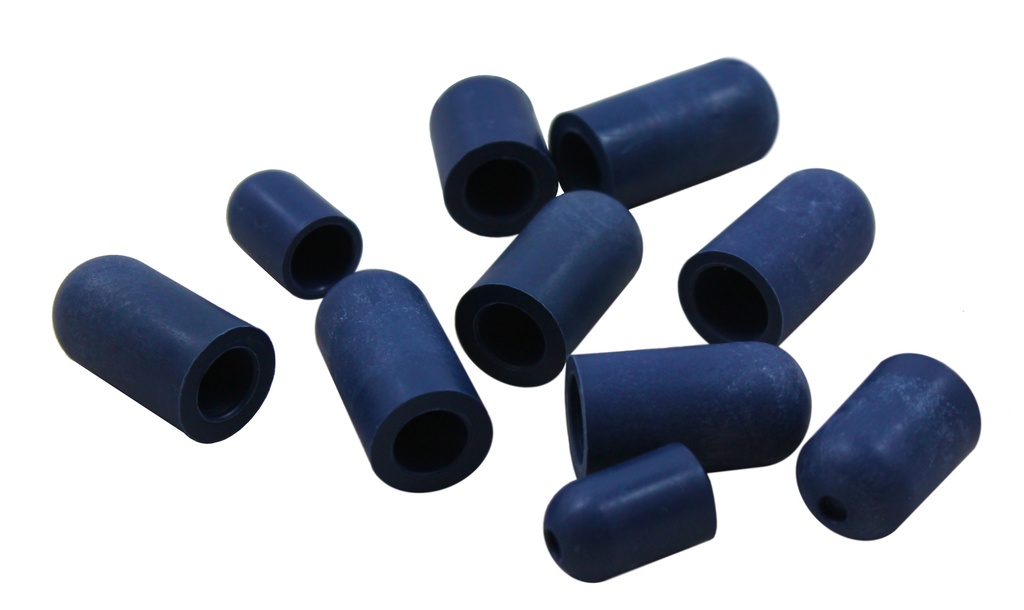
Buy your J.Costa weights with a discount!
Find your ideal weights and configure your J.Costa variator to your liking thanks to our unbeatable prices.
Materials and dimensions of J.Costa weights
What are commonly known as J.Costa rollers are made from a plastic compound combined with Kevlar and carbon fibre that provides high durability under extreme use. The latest generation and development of J.Costa weights receive a blue pigmentation that identifies them as the improved formula of this very important component in our CVT transmission.
J.Costa offers you 5 different weight dimensions depending on their length: 20mm, 25mm, 31mm, 34mm and 38mm. To know which dimension you need, you only have to measure the height of one of your weights.
As for diameter, all weights have the same diameter, 16mm, except for the 20mm-long weights, which are intended for smaller variators and therefore have a suitable size.
What weight should I choose for my variator?
For your J.Costa variator, you have different weights available depending on your needs and riding style. To know which is the best option for you, we break down the available options:
1. Optimal weights set by J.Costa
At J.Costa, we have established ideal weights for each type of variator and motorcycle. These weights are the perfect balance between acceleration and top speed in tests carried out on our unloaded test bench and tested on open roads.
To find out the recommended weight, you only have to search our website for your model or the reference of your variator to see its spare parts.
2. More acceleration
Depending on the geographical area, the rider’s physical characteristics, or simply riding style, you may need more acceleration than that established by our experts. To do this, you must install a lower weight than the one you currently have fitted.
To know the weight of your weights, you can weigh them or search for the spare part for your variator to find out our recommended weight.
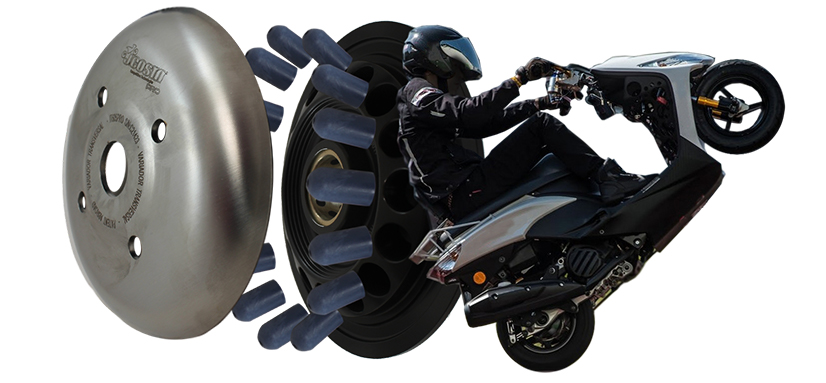
At J.Costa, we recommend not reducing the weight of the weights by more than 1 gram so as not to drastically change the behaviour of the variator. In this way, we will increase the rev range and its acceleration.
We must bear in mind that top speed will be compromised when gaining more acceleration, as our gear development will change.
3. More top speed
If you are a rider who covers many stretches of dual carriageway or motorway without steep gradients and you need a little more final speed, by adjusting the weight of your weights you can achieve that extra increase in top speed.
At J.Costa, we recommend not increasing the weight of the weights by more than 1 gram so as not to drastically change the behaviour of the variator.
We must bear in mind that the acceleration of our motorcycle will be compromised when gaining more top speed, as our gear development will change.
When should I change the weights of my J.Costa variator?
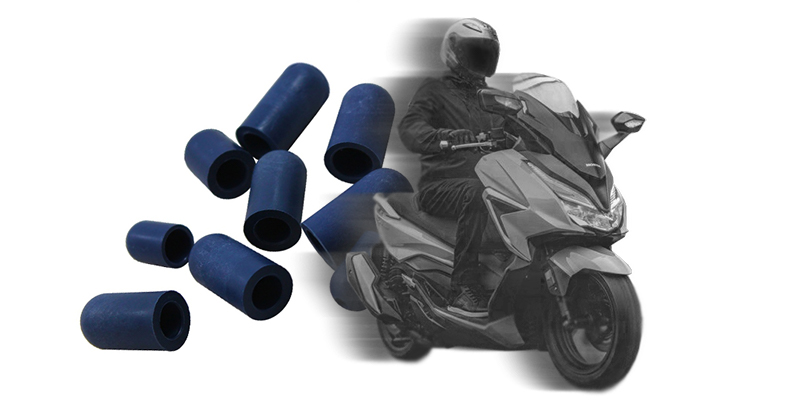
As manufacturers, we recommend replacing your J.Costa weights or rollers approximately every 2 oil changes. Depending on your motorcycle’s displacement and riding style, wear may vary, so it is important to carry out a visual inspection to check their condition at every oil change.
The weights are the consumable element responsible for ensuring the variator works correctly, so we must make sure they are in good condition.
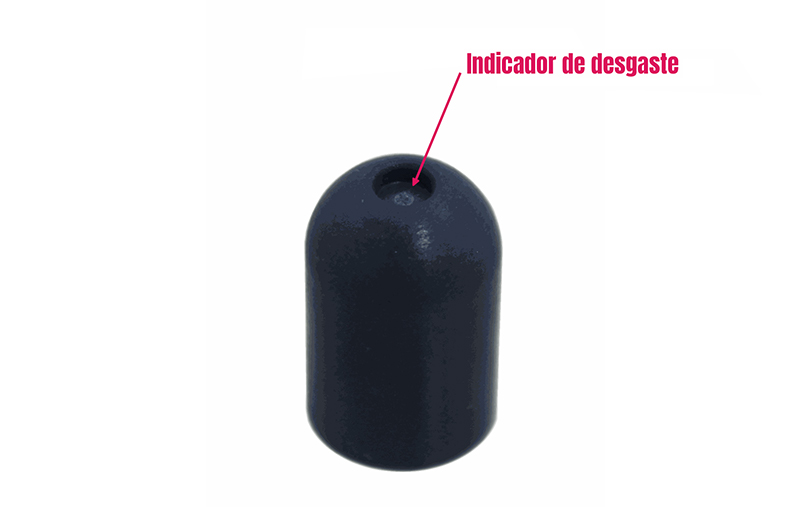
To know whether your weights have reached the end of their service life, we only need to observe the wear indicator located at the end of the weights, as we can see in the image.
Remember that you have all this information and much more about how to maintain your variator in the assembly instructions or in our blog about J.Costa variator maintenance.
We hope you have learned a lot about how to configure the J.Costa variator according to the weight of your weights. Are you ready to apply it? Start customising your scooter now at the best price!